What really happens in your body in the first days of a fast, and where a diluted juice fast fits.
Many guests arrive at the farm with one question: will I get into ketosis?
It’s a fair question. Ketosis has become something of a holy grail in fasting circles, measured, discussed and chased as proof that a fast is working.
I’d like to offer a calmer picture. Ketosis is real, and it’s a natural part of fasting. But it isn’t the goal. To see why, it helps to follow what the body actually does, hour by hour and day by day, once the last meal is finished.
The first hours: the gut clears its own house
The first changes happen quietly, in the gut.
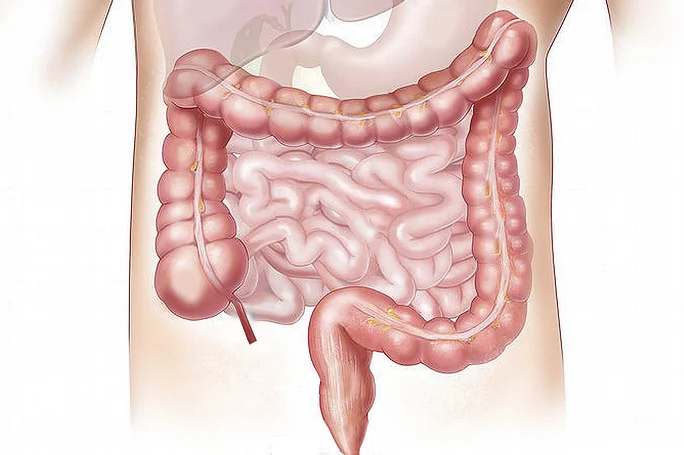
Between meals, the stomach and small intestine run a rhythmic cleaning wave known as the migrating motor complex. It moves through in cycles, sweeping what is left of the last meal onward. Researchers have called it the gut’s “housekeeper”.
This wave runs only when the gut is empty. Eating stops it. So the habit of constant grazing, a snack here and a drink there, keeps interrupting one of the body’s own housekeeping systems. A fast gives it the uninterrupted time it is designed for.
Then the liver’s store
Glucose, a simple sugar, is the cells’ primary fuel. It’s the energy the body reaches for first.
Once the last meal has been used, the body turns to the liver, which keeps a reserve of glucose stored as glycogen. This store keeps blood sugar steady through the first part of a fast. The liver can also make a little fresh glucose of its own, for the organs that depend on it most.
The switch: 12 to 36 hours
As the liver’s store runs low, the body turns more and more to its own fat. Researchers call this the metabolic switch, and it usually happens between 12 and 36 hours after the last meal. When exactly depends largely on how full the liver’s store was when the fast began.
During the switch, the liver turns part of that fat into ketones: small molecules that many tissues, including the brain, can use for energy.
That’s all ketosis is. The body running on its backup fuel because the main supply has stepped back. A sign of a well-designed system, not a finish line.
Over the following days, ketones rise
Ketones don’t arrive all at once. They begin modestly around the switch, then climb steadily over the following days as the body settles into running on its own reserves.
None of this has to be forced. It’s what the body is built to do.
What ketosis is not
Here’s where the misunderstanding lies.
Being in ketosis tells you one thing: which fuel the body is using right now. It doesn’t, by itself, mean the body is cleansing. A person can be in ketosis on a diet very high in fat, with a busy digestive system and no real rest, and gain little of what a fast is for.
The deeper work of a fast comes from somewhere else. Digestion takes real energy, every single day. When it’s given a rest, that energy is freed. In our approach, it’s this rest, and the energy it returns to the body, that lets the body turn inwards and do its own cleansing. Cells have their own recycling system, known as autophagy, and fasting is its main natural trigger, although exactly when it peaks in people is still being studied.
So ketosis travels alongside this remarkable unfolding. It’s a companion on the road, not the destination. That’s why we don’t chase a number. Our task is to create the conditions: rest, quiet, hydration, time and, above all, patience.
Where our diluted juice fast fits
At International Wellness Farm, our guests follow a diluted juice fast. It sits between a juice fast and a water fast.
Juice fasting is often dismissed as a lot of “sugar”. The word “sugar” is a misnomer and a widely misunderstood one. Fruit sugars are made up of simple carbohydrates, that is, fructose and glucose: the very simple sugars that run every cell in the human body.
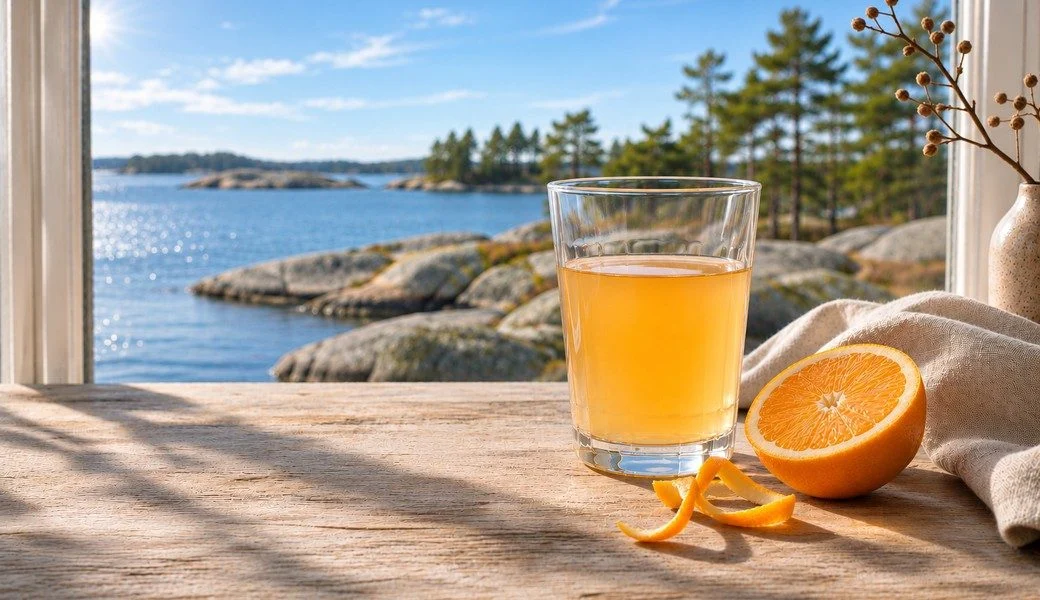
The juice we use is freshly squeezed orange juice, diluted with water. The orange juice also has a quality known as astringency. Astringency is the ability to draw acids out of the cells. That gives the diluted juice a double advantage. It is not only hydrating, but also cleansing at a cellular level, and at a very subtle level it meets the cells’ basic need for fuel, enough for basic brain function through the fast, without the extreme that a water fast induces. The body still moves into ketosis and turns to its own fat stores. The gut, meanwhile, is left largely at rest.
That’s what we see with our fasting guests. And because we would rather show you than simply tell you, we can measure the degree of ketosis with ketone strips through the fast.
Our fasting retreats follow an optional 30-day pre-cleanse at home: four weeks of fresh, plant-based food and herbal support, so as to open up the pathways of elimination and prepare the body prior to the fast beginning.
Who should not fast without medical advice
Fasting is not for everyone, and it’s never something to push through alone. Please speak with your doctor before any fast if you are pregnant or breastfeeding, take medication (diabetes medication especially), have an active stomach ulcer, or have a history of an eating disorder.
A final note: the pure water fast
The pure water fast is the oldest form of fasting, and the reference point against which every other fast is measured. Nothing is taken in but water, and the body is left entirely to its own reserves. It has a long history, and it has its place.
It is also the most demanding, and it asks the most of the person doing it. For most of our guests, a supervised, diluted juice fast is the kinder way in. It keeps them steady enough to walk, rest and take part in the day, and it achieves much of the same: the gut at rest, the switch to fat, and ketones rising, just as they do on water.
If you’ve been wondering whether a fast is right for you, or you’d like to understand what your own body would go through, send me a message. I’m happy to talk it through. Or book a free consultation.
Warmly,
Malcolm
This article is for general information and is not medical advice. If you have a medical condition or take medication, please speak with your doctor before fasting.
Sources
Anton SD, Moehl K, Donahoo WT, et al. Flipping the Metabolic Switch: Understanding and Applying the Health Benefits of Fasting. Obesity 2018;26(2):254–268. doi:10.1002/oby.22065
Deloose E, Janssen P, Depoortere I, Tack J. The migrating motor complex: control mechanisms and its role in health and disease. Nature Reviews Gastroenterology & Hepatology 2012;9(5):271–285. doi:10.1038/nrgastro.2012.57
Owen OE, Morgan AP, Kemp HG, et al. Brain metabolism during fasting. Journal of Clinical Investigation 1967;46(10):1589–1595.
The Nobel Prize in Physiology or Medicine 2016, awarded to Yoshinori Ohsumi for discoveries of mechanisms for autophagy.